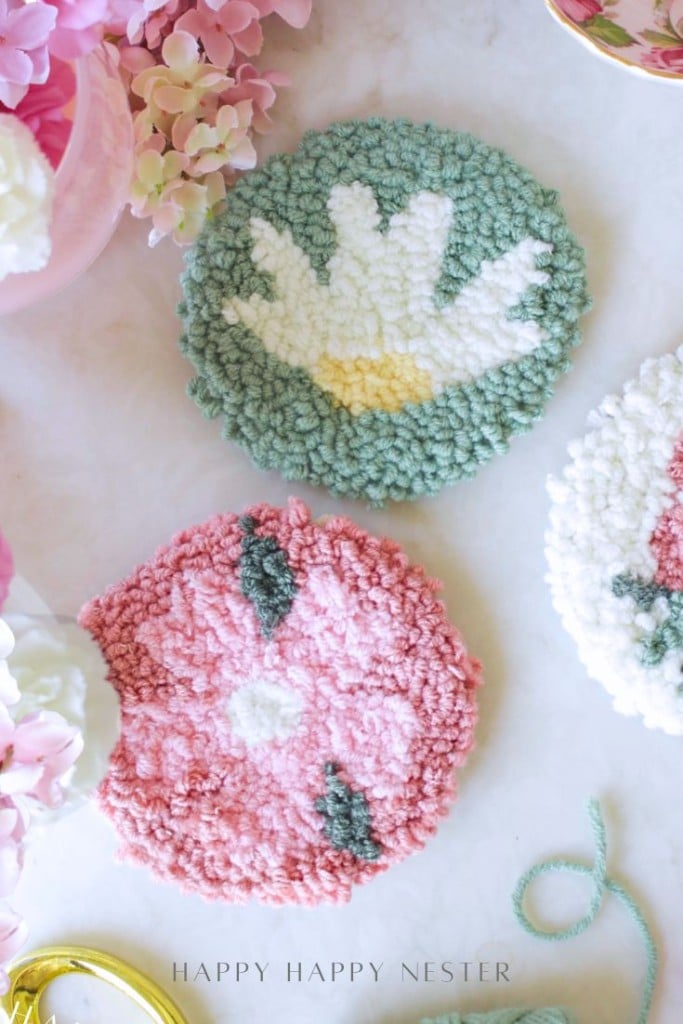
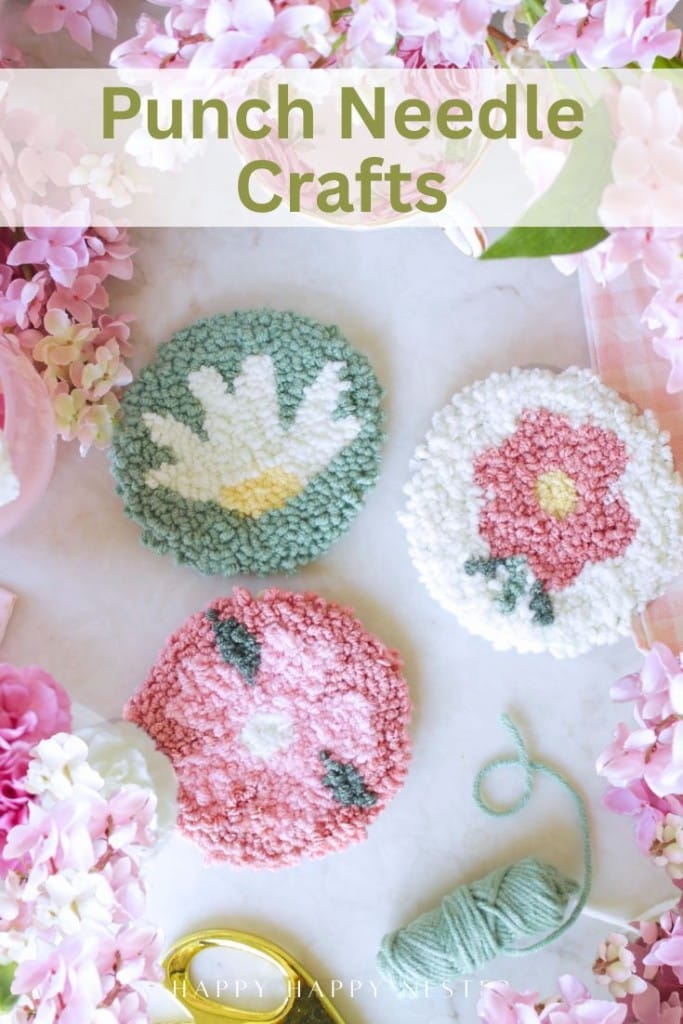
Punch Needle Crafting DIY is a cozy, beginner-friendly craft, and I had the best time making these three adorable coasters from a simple kit. This project comes together quickly and is perfect for adding a handmade touch to your coffee table or gifting to a friend. If you’ve been wanting to try punch needle embroidery, these cute little coasters are a fun and easy place to start.
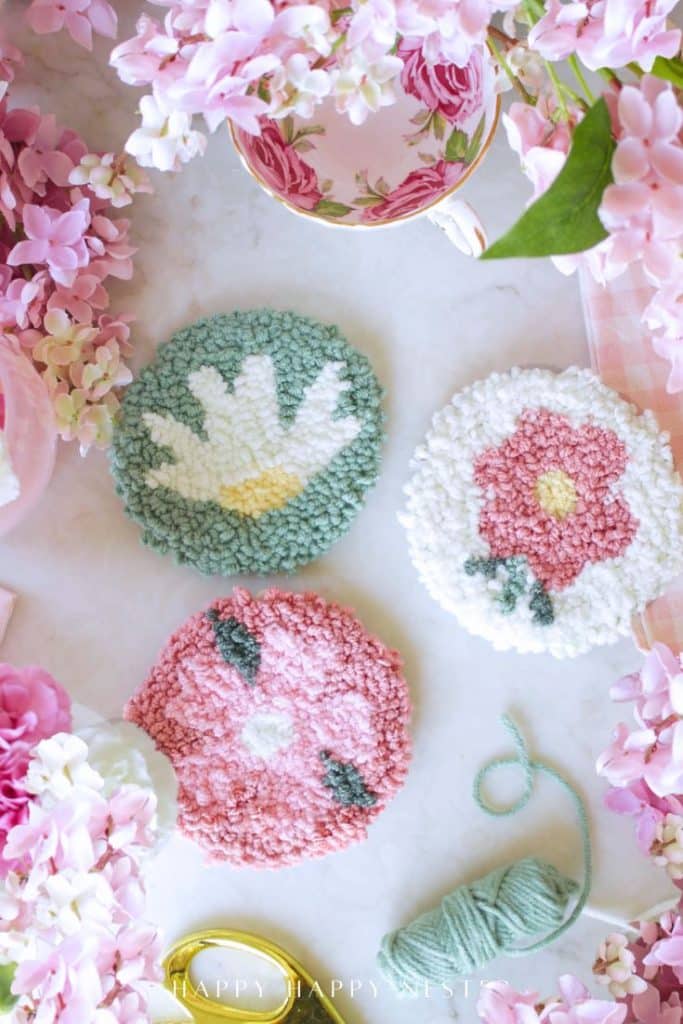
I’ve been seeing punch needle embroidery pop up all over Instagram, and I have to admit, I was totally intrigued by this cozy little craft. When I found these cute Amazon kits, I thought they looked like the perfect, no-pressure way to try punch needle. There’s a tiny learning curve at first, but honestly, that’s part of the fun — and it quickly becomes so relaxing and addictive. I’m sharing my favorite tips and helpful little lessons so you can dive in, avoid a few beginner hiccups, and enjoy every stitch along the way.
I’ve been busy getting settled into our new home, and it feels so nice to finally slip back into my creative routines again. With spring right around the corner, I’m feeling inspired to make all the pretty, cheerful crafts that celebrate the season. If you’re in the mood to create along with me, take a peek at my other craft projects — I have lots of fun ideas to share!
More Floral Craft Projects!
Trader Joe’s Flower Arrangements DIY
Decoupage Oyster Shells (Painted)
How to Make a Small Bouquet of Flowers
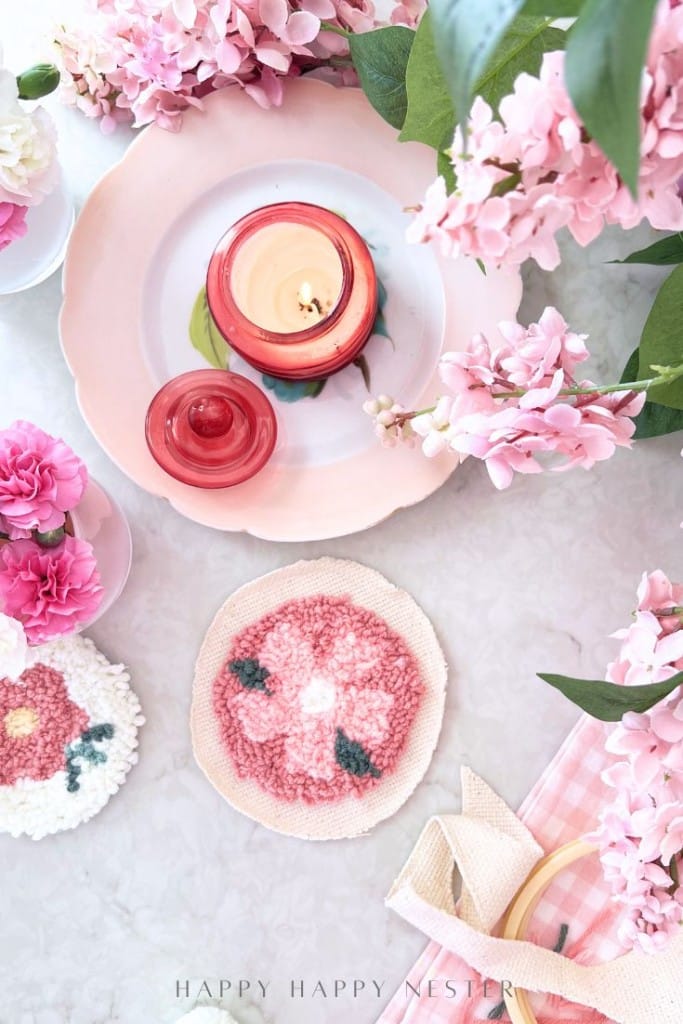
Punch Needle Crafting DIY: How to Make Cute Beginner Coasters
Punch Needle Crafting DIY is a cozy and beginner-friendly craft that makes it easy to create textured, handmade projects like these adorable coasters. Using a simple kit, I made three cute designs that came together quickly and were surprisingly relaxing to stitch. If you’ve been curious about punch needle embroidery, this project is the perfect introduction. These coasters are not only functional but also make sweet handmade gifts or charming decor for your coffee table.
What Is Punch Needle Crafting?
Punch needle crafting is a type of embroidery that uses a hollow needle to create loops of yarn on fabric, resulting in a soft, tufted texture. Unlike traditional embroidery, the stitches are created from the back of the fabric, which forms a plush design on the front.
Why you’ll love it:
- Beginner friendly
- Quick results
- Relaxing and repetitive
- Great for small projects like coasters, ornaments, and wall art
Supplies Needed for Punch Needle Coasters
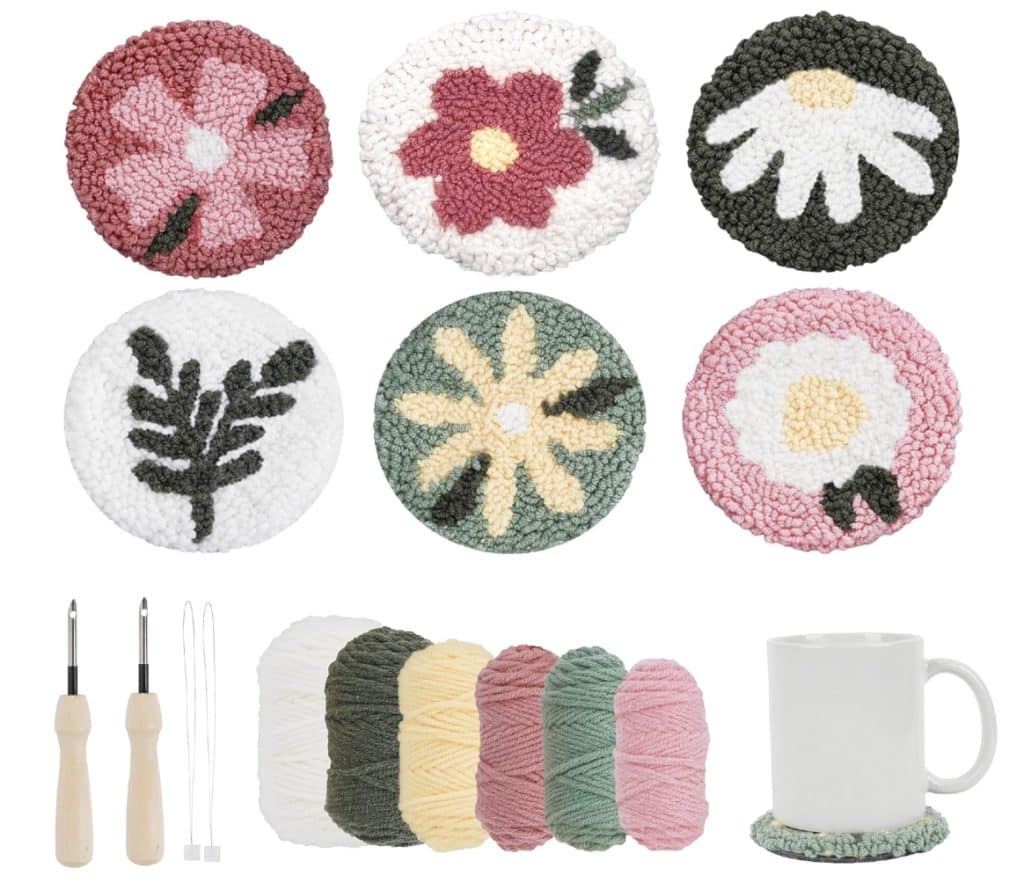
Most kits include everything you need, but here’s a quick list:
- Punch needle tool
- Embroidery hoop or frame
- Punch needle fabric (Monk’s Cloth)
- Yarn
- Printed pattern on cloth or template
- Scissors
- Fabric glue, hot glue gun, or backing felt (for finishing)
Important Punch Needle Tip (Don’t Skip This!)
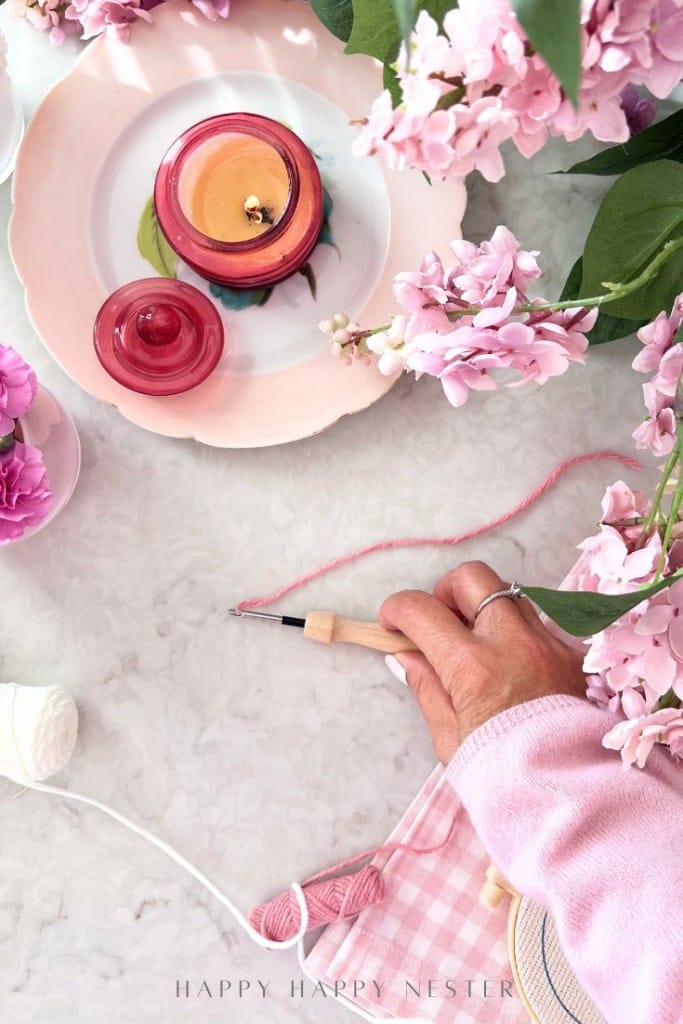
One of the most important things to remember is:
👉 The yarn should trail behind the stitch.
This means the needle opening must face opposite the direction you’re stitching.
Why this matters:
- Prevents yarn tangling
- Keeps loops even and secure
- Helps stitches stay in place
- Creates smoother lines and shapes
If your stitches are pulling out or skipping, this is usually the reason!
How to Make Punch Needle Coasters (Step-by-Step)
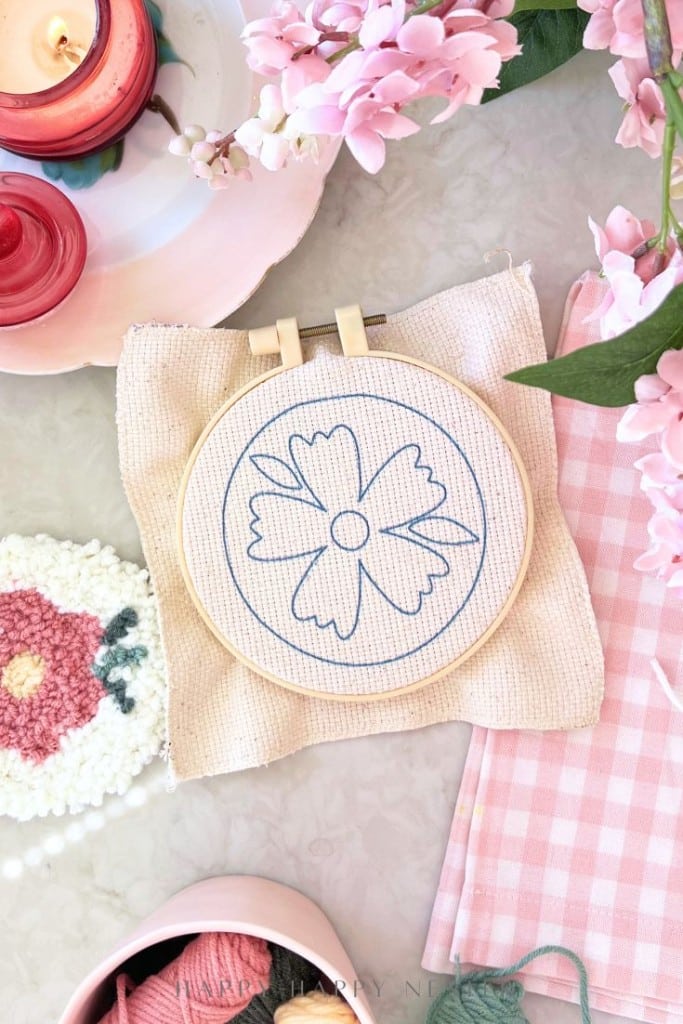
Step 1 — Prepare Your Fabric
How to Place Fabric in an Embroidery Hoop for Punch Needle
Start by separating the embroidery hoop into the inner and outer rings and loosening the screw on the outer hoop. Lay the inner hoop on a flat surface, then place your punch needle fabric over it with the printed design facing up (this will be the top side of the hoop). Next, press the outer hoop down over the fabric and inner ring, gently pulling the cloth so it sits smooth and wrinkle-free.
Once the fabric is centered, tighten the screw on the outer hoop while continuing to tug lightly on the fabric edges. You want the cloth to feel drum-tight, which helps the needle punch clean stitches and prevents skipped loops. If needed, give the fabric one last gentle pull all the way around after tightening to keep everything nice and taut.
Stretch your cloth tightly in an embroidery hoop. The fabric should feel drum-tight so the needle can punch cleanly.
Step 2 — The Design
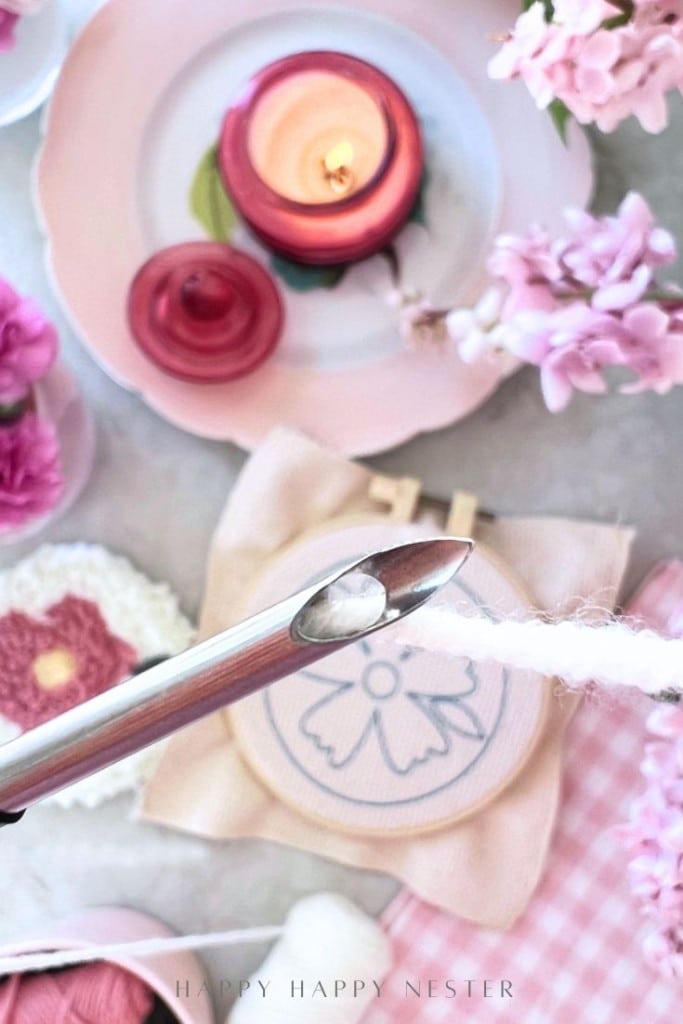
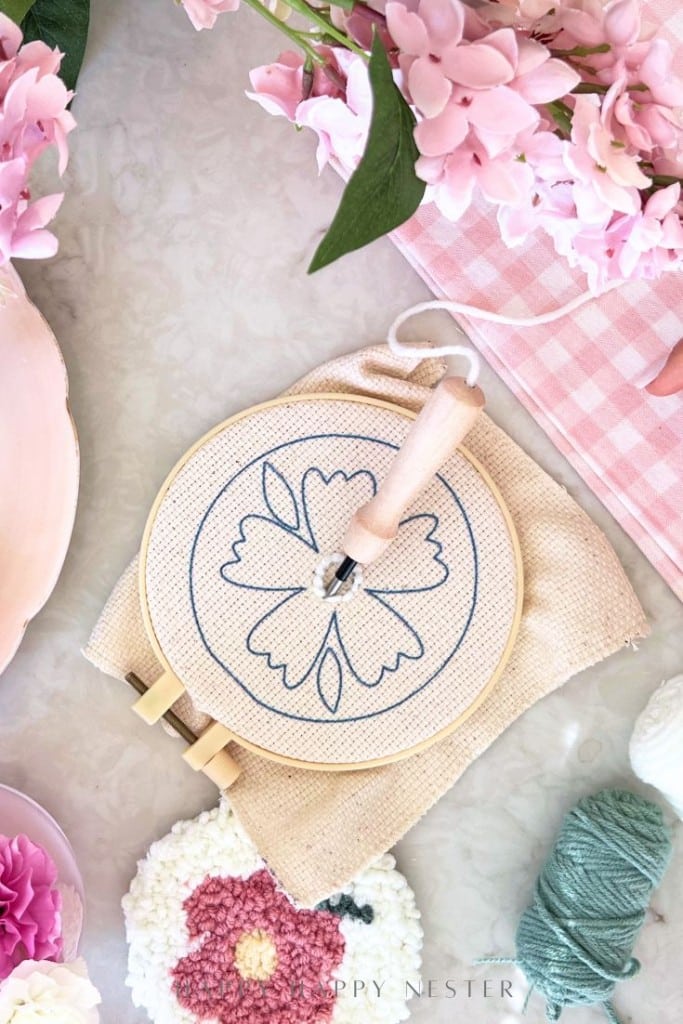
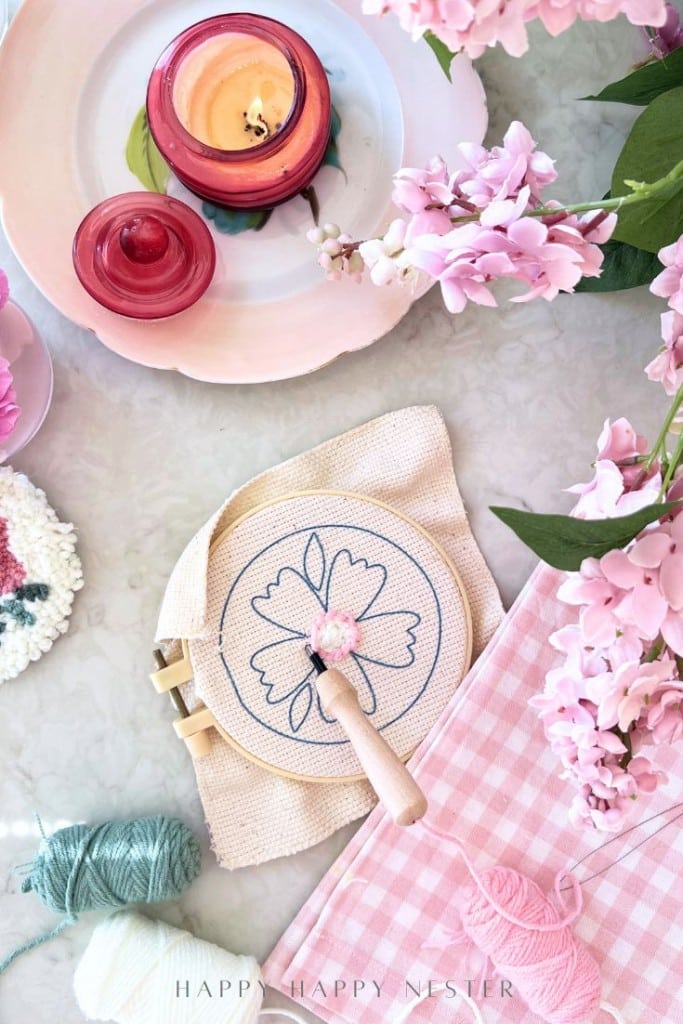
The kit comes with the design printed on the cloth. Remember, you’ll be punching from the back side, so your finished design appears on the front.
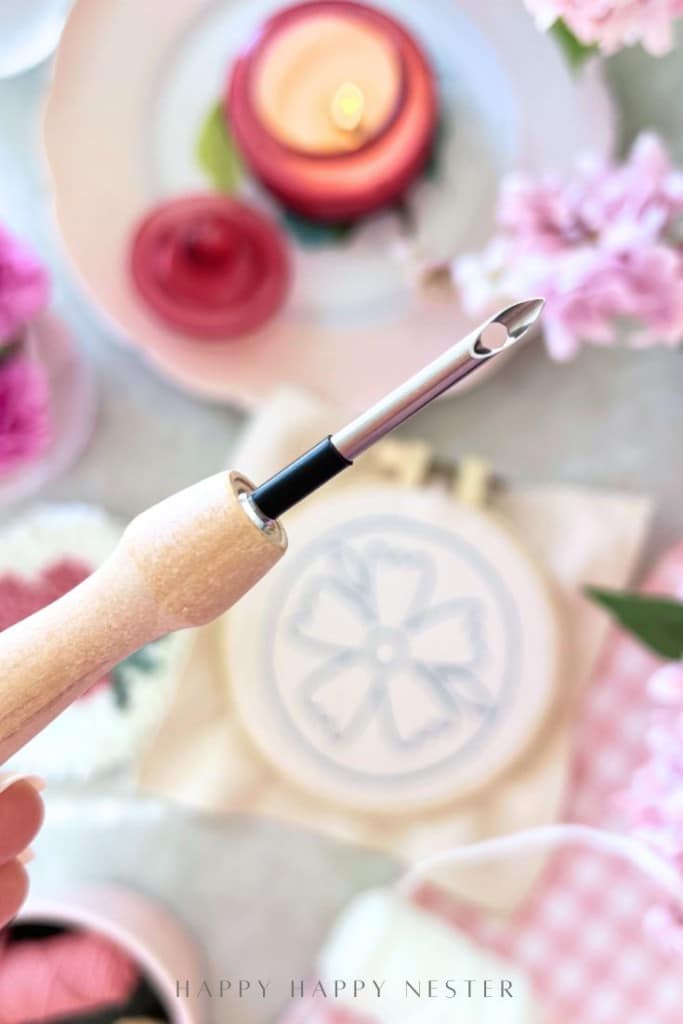
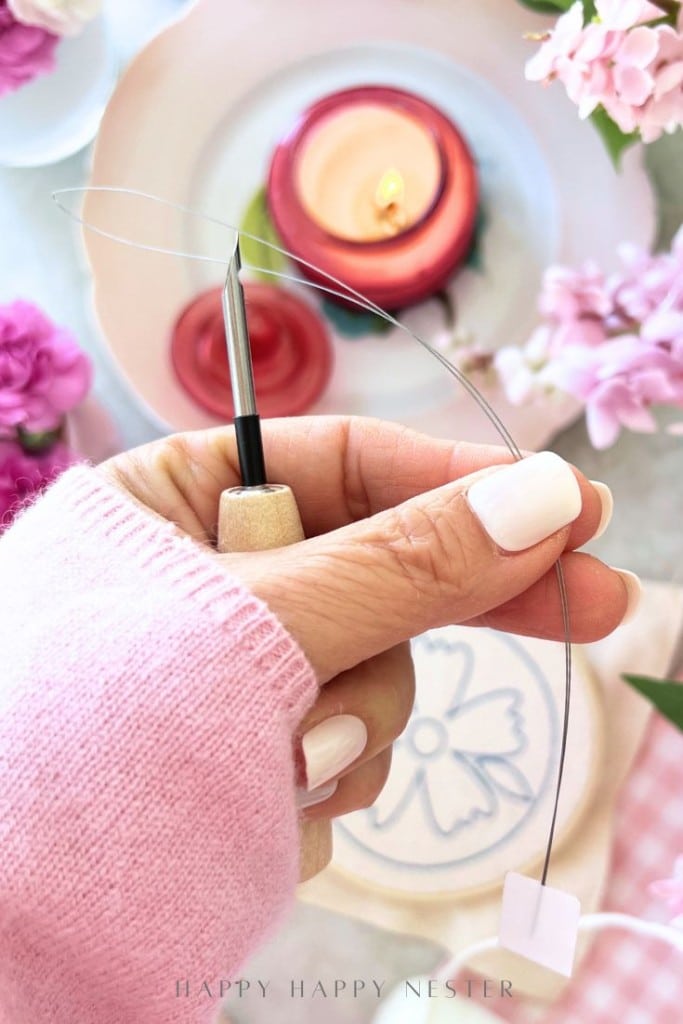
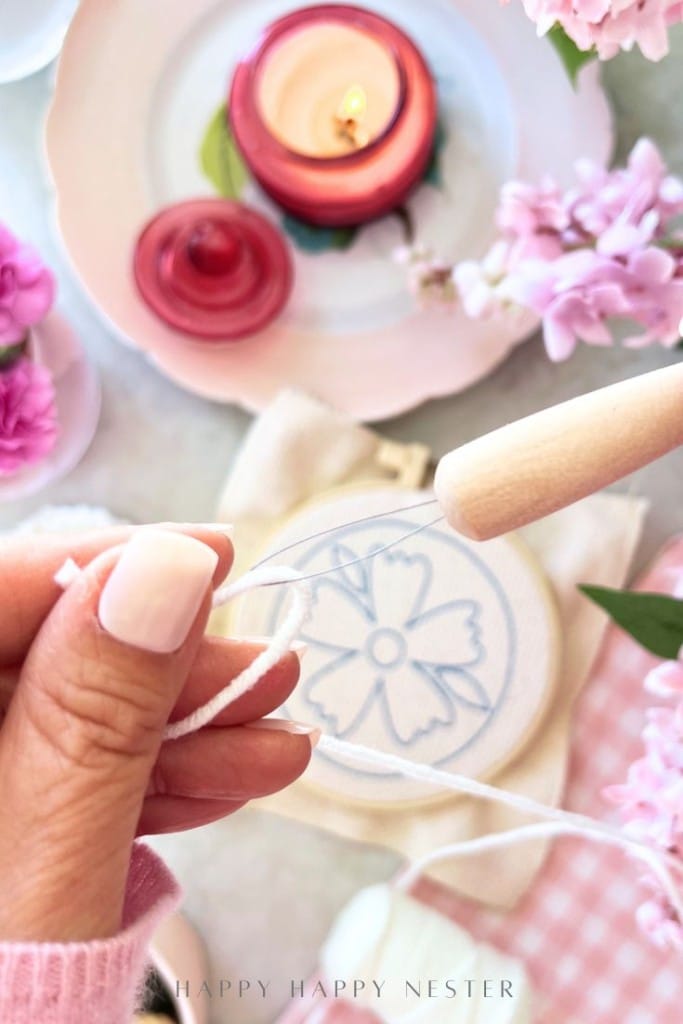
Step 3 — How to Thread a Punch Needle
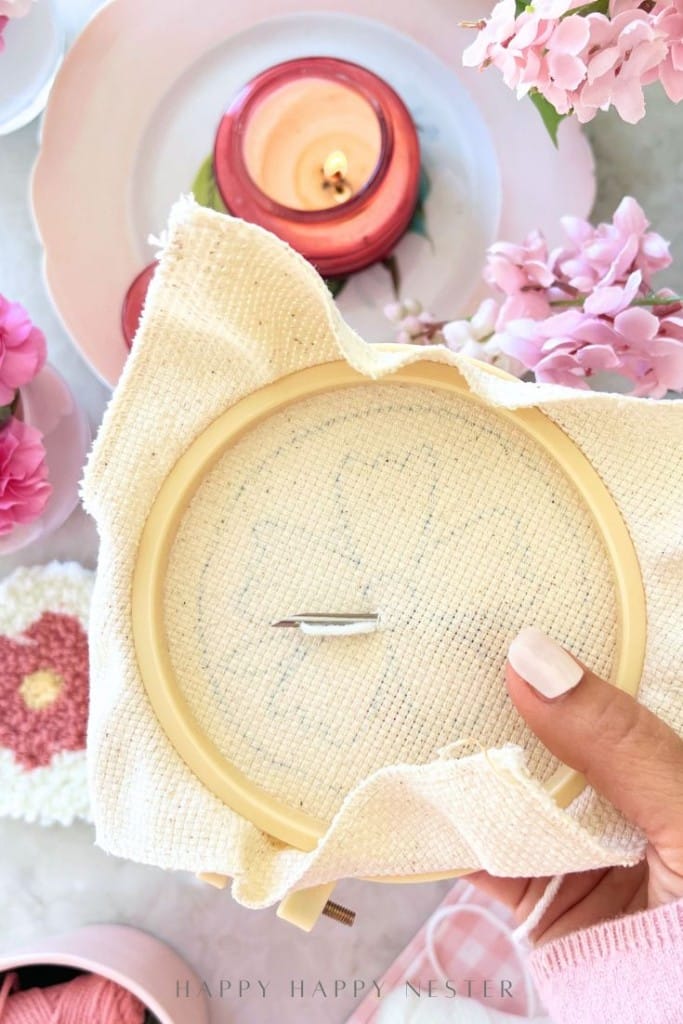
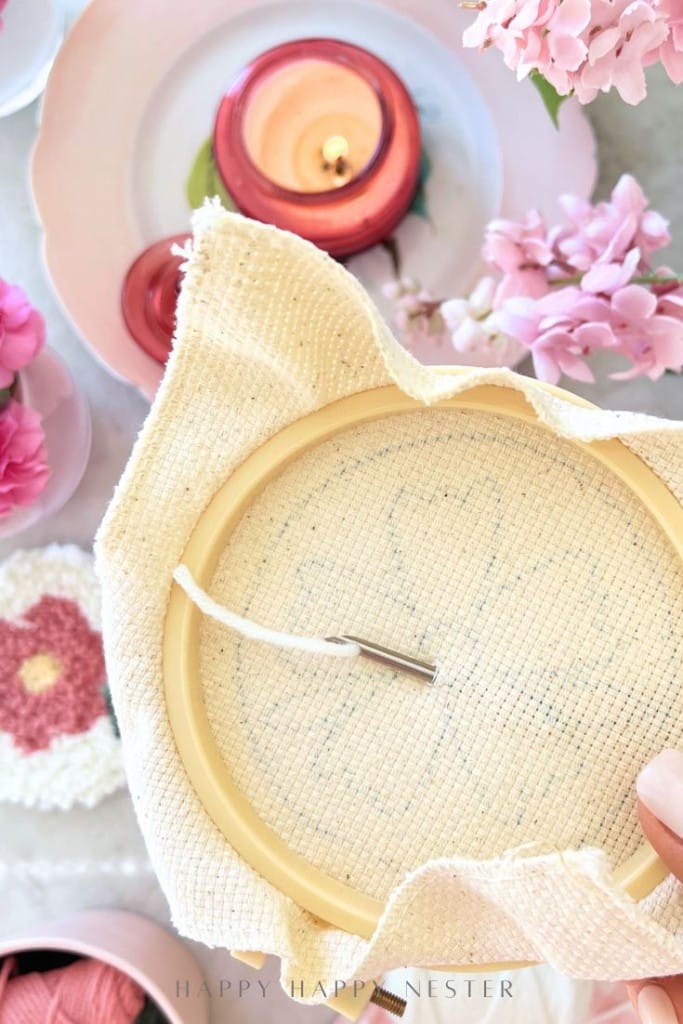
Threading a punch needle can feel a little tricky the first time, but once you understand the path of the yarn, it becomes much easier. Start by inserting the needle threader loop into the backside of the punch needle tip and gently guide it all the way down through the hollow shaft (my second image is not quite right; the wire hoop should go down into the needle and handle). Continue pushing the threader through until it travels into the wooden handle and the loop appears just outside the small hole at the bottom of the handle.
Next, place your yarn through the threader loop and carefully pull the threader back up through the handle and needle shaft. This motion draws the yarn smoothly through the inside of the punch needle. To finish, insert the threader through the eye at the needle tip, pull the yarn through, and remove the threader — leaving a short yarn tail ready for stitching.
Step 4 — Start Punching
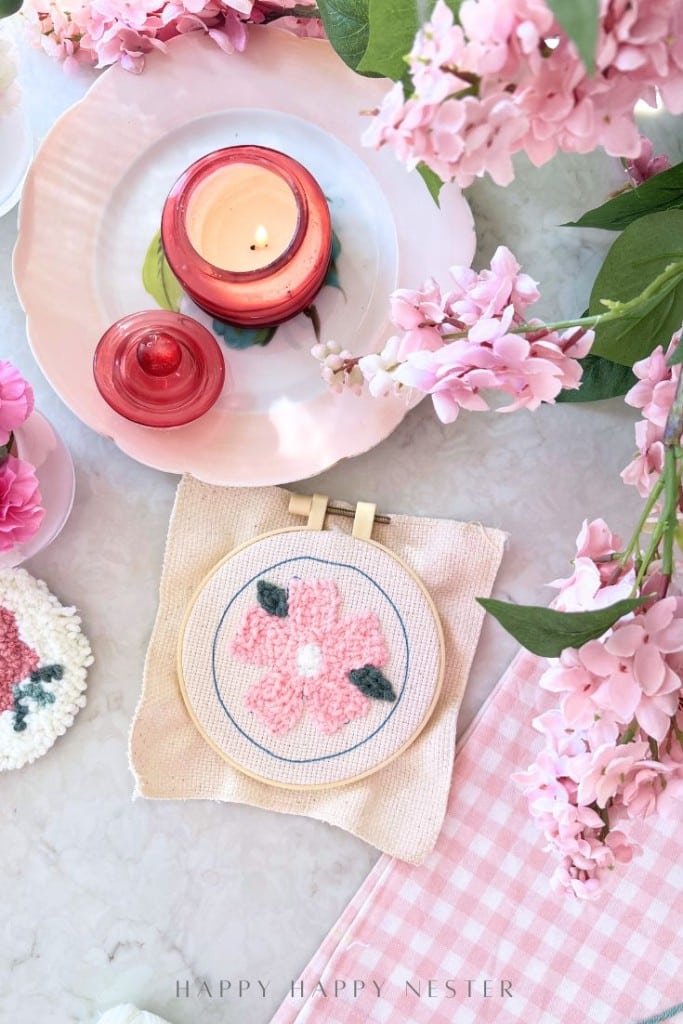
To begin, insert the needle straight down into the fabric until the handle touches the surface. For your very first stitch, gently pull the yarn tail through to the back of the fabric before bringing the needle back up — this helps secure your starting point and prevents loose loops. When making your next stitch, move the needle over about two fabric holes before punching down again, which keeps your stitches evenly spaced and nicely connected.
As you continue, lift the needle just slightly above the fabric and move forward without pulling too high. I also like to rotate the embroidery hoop (and fabric) as I work, which helps maintain a smooth stitching pattern and ensures the yarn tail and needle opening stay behind the direction of your stitching.
✔ Keep the needle close to the fabric surface
✔ Move slowly and evenly as you stitch
✔ Make sure the yarn trails behind the needle (with the needle opening facing opposite your stitching direction)
✔ Avoid holding the threaded yarn down with your hand or fingers while punching, since the yarn needs to feed freely through the needle
This steady motion creates smooth, even loops and helps your design stay neat and secure.
Step 5 — Fill in Your Design
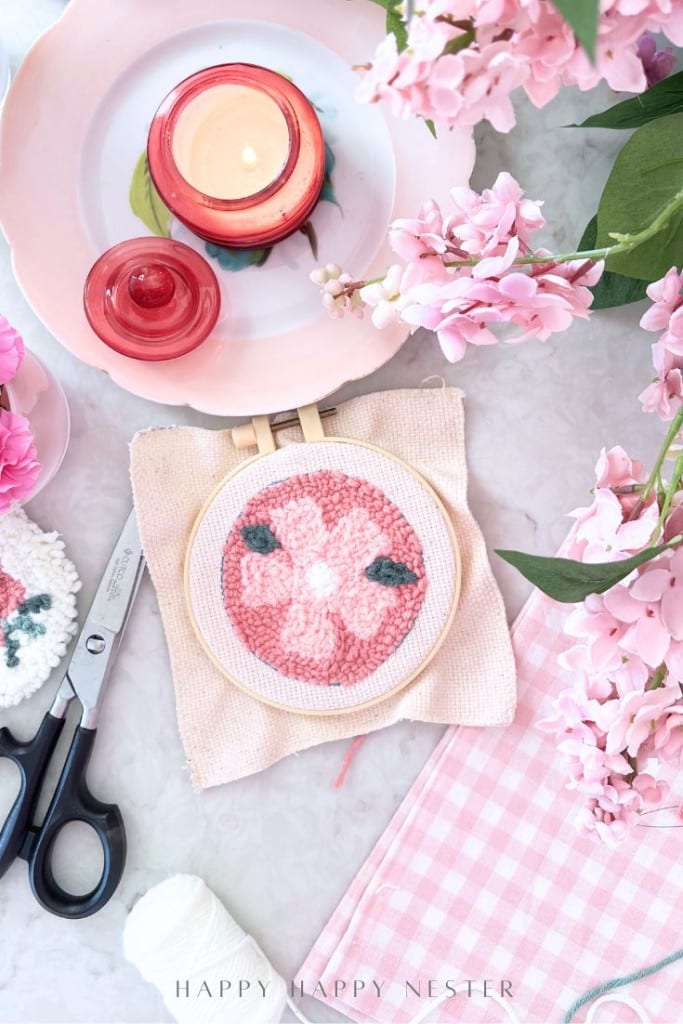
Outline your design first, then fill the interior with rows of stitches. You can change yarn colors to create fun patterns and texture.
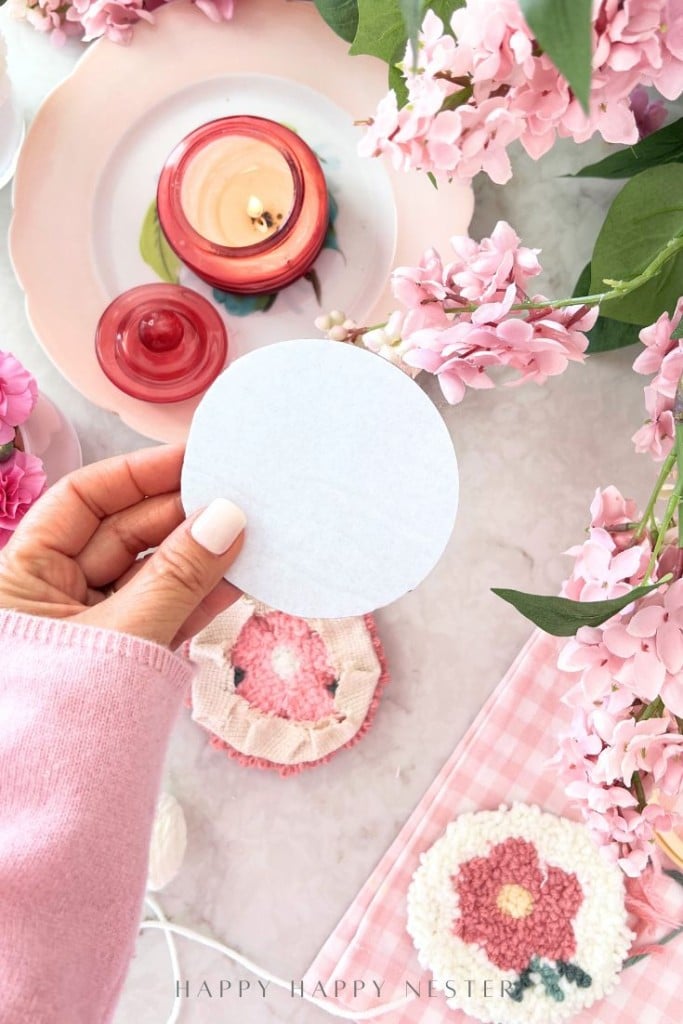
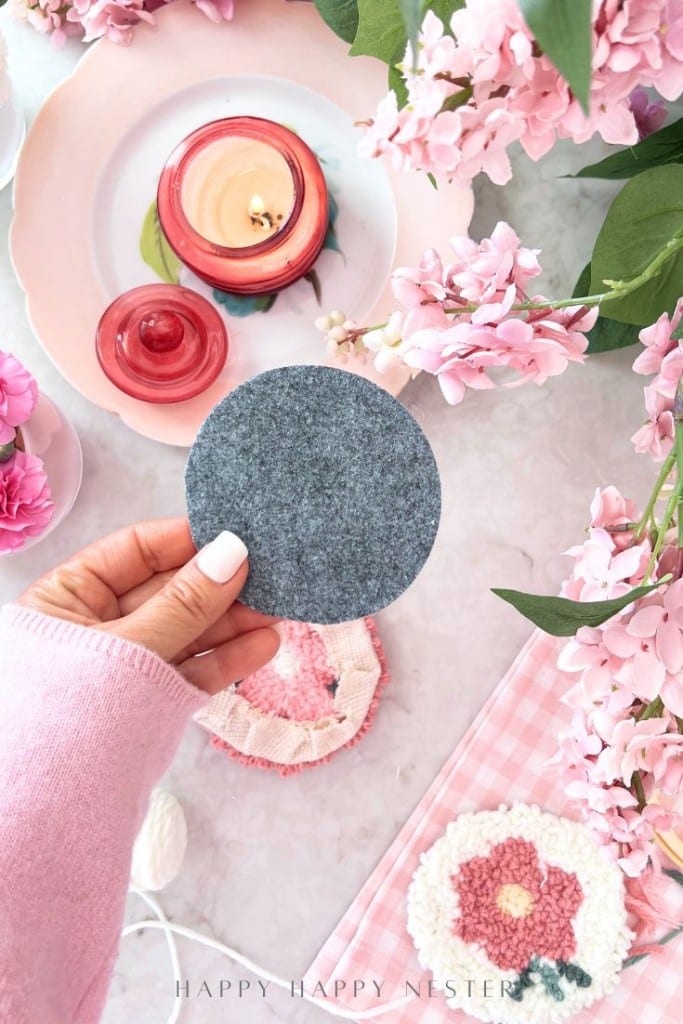
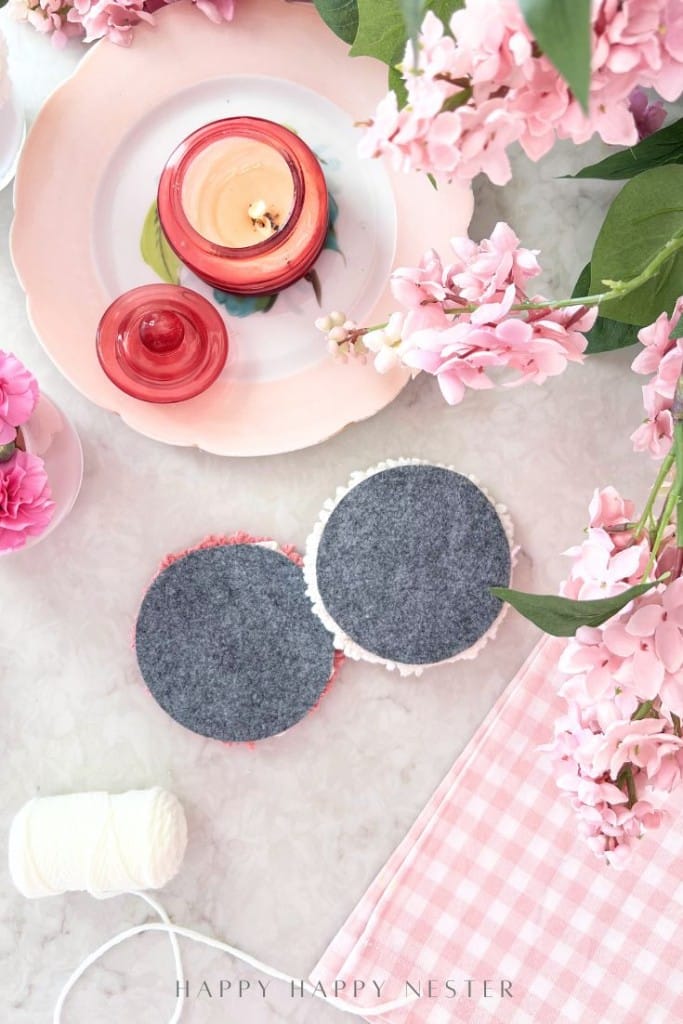
Step 6 — Secure and Finish the Coaster
Once finished:
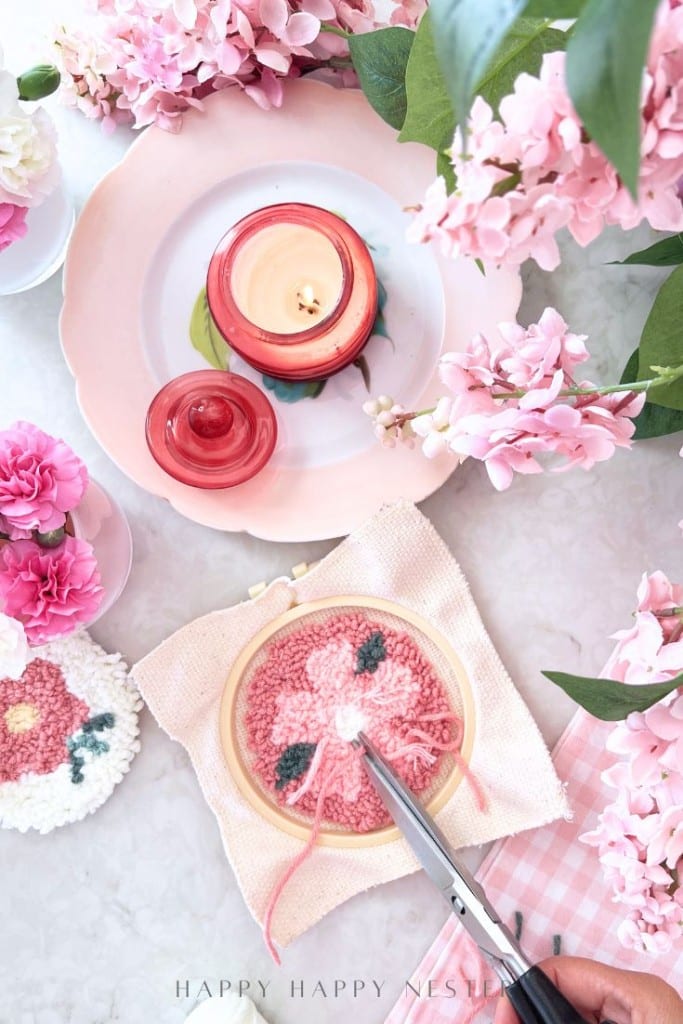
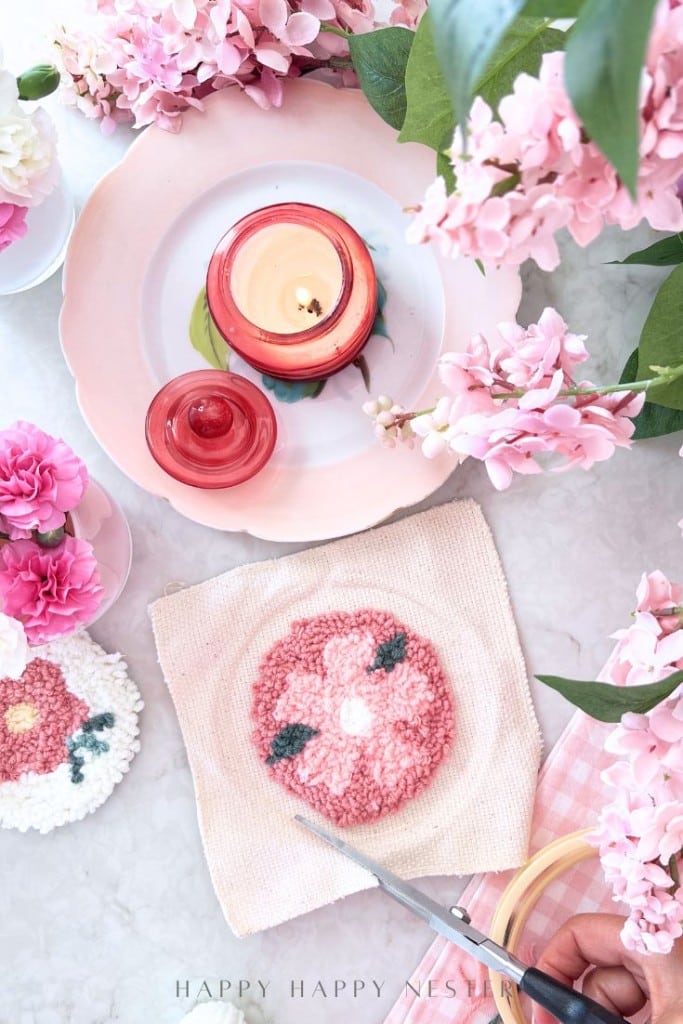
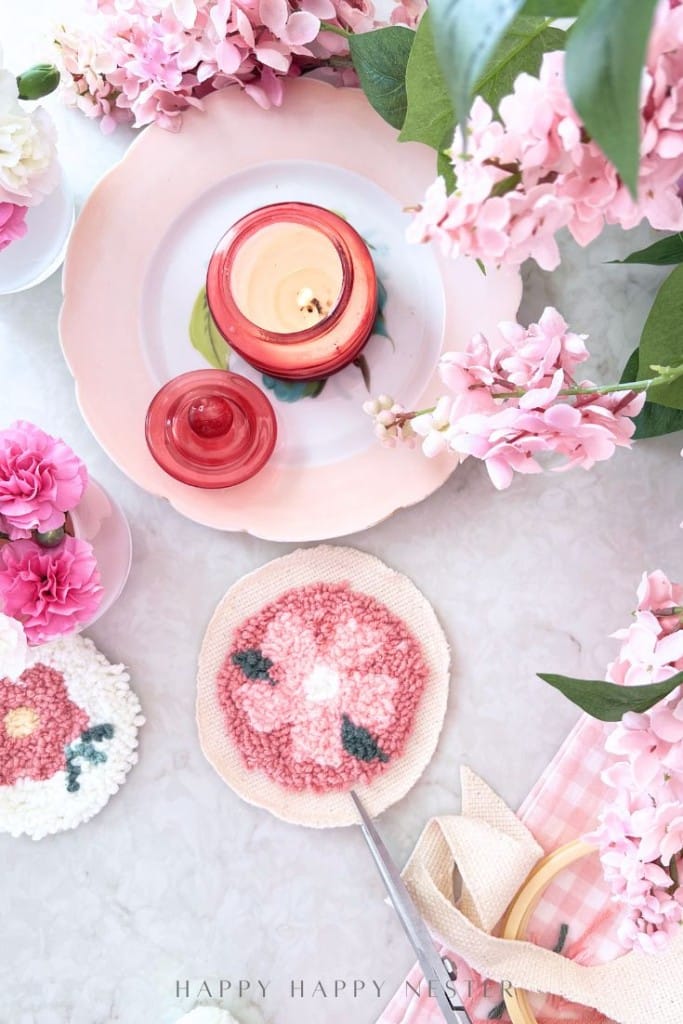
- Once your punch needle design is complete, it’s time to secure the stitches and turn your piece into a finished coaster. Start by flipping your work to the front and trimming any excess yarn tails, being careful not to cut your loops.
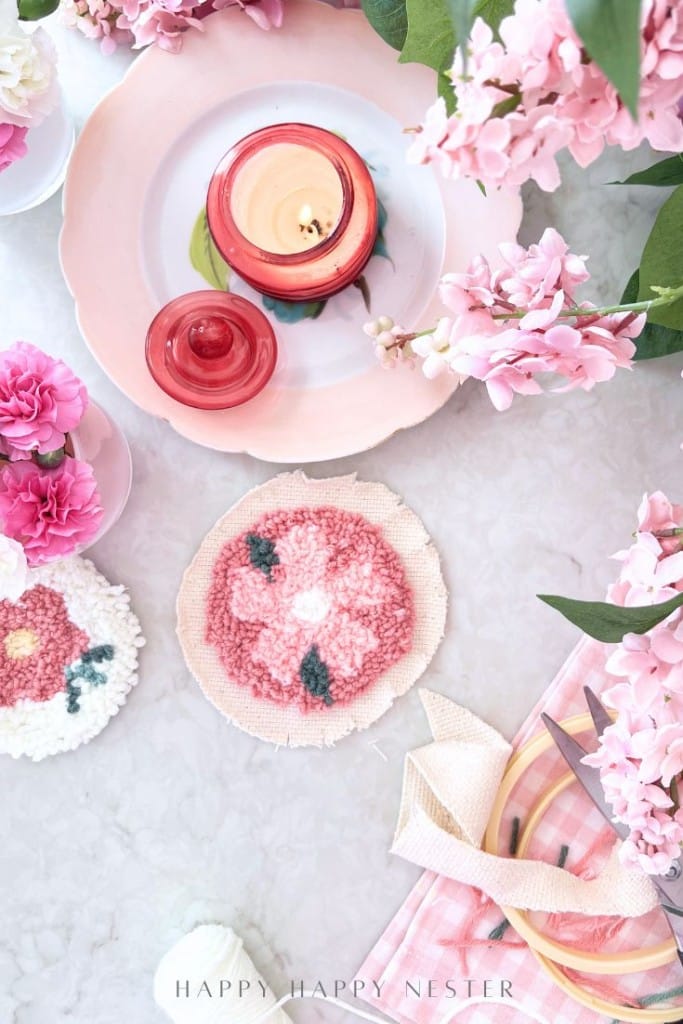
- Next, remove the embroidery hoop. You’ll notice a faint crease line left by the hoop — this makes the perfect guide for trimming away the excess fabric. Carefully cut around your coaster shape, then snip a few small perpendicular cuts from the outer edge of the fabric toward the design, stopping just shy of the loops. These small cuts allow the fabric to fold smoothly around curves without bunching.
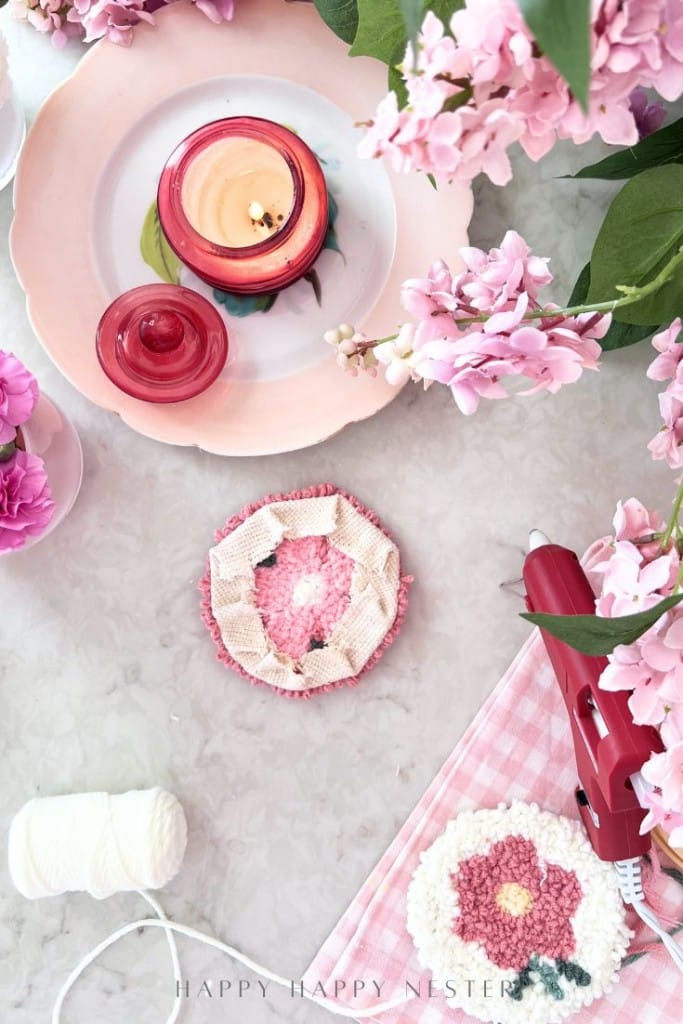
- Fold the trimmed fabric flaps over to the backside and secure them with hot glue, pressing gently so the edges lay flat and tidy. To finish, peel and stick a piece of sticky felt backing over the glued fabric. This adds durability, protects surfaces, and gives your coaster a clean, professional finish.
Beginner Tips for Punch Needle Success
- Keep fabric tight in the hoop
- Don’t pull the needle too high between stitches
- Use yarn that matches your needle size
- Work slowly to avoid skipped stitches
- Practice on scrap fabric first
Why Punch Needle Coasters Are a Great Beginner Project
These little coasters are perfect because:
- Small and quick to finish
- Great way to practice technique
- Minimal yarn needed
- Easy to gift or decorate with
Plus, they add the cutest handmade touch to your home (and look adorable styled with coffee mugs!).
Fun Variations to Try
- Floral coaster designs
- Geometric patterns
- Neutral-textured coasters
- Holiday shapes
- Monogram or personalized coasters
FAQs About Punch Needle Crafting
Why are my stitches pulling out?
Usually, the needle is pointing the wrong way or is lifted too high.
Can I use regular yarn?
Yes! Just match yarn thickness with your needle size.
Do I need to seal punch needle projects?
For coasters, sealing with glue and adding backing helps durability.
Punch needle crafting is such a relaxing and satisfying DIY, and these cute little coasters are the perfect way to learn the technique. Once you get the hang of keeping the yarn trailing the stitch, the process becomes smooth and almost meditative. I loved how each coaster turned out with its soft texture and handmade charm. If you’ve been looking for a cozy new craft, this punch needle project is definitely worth trying.
Happy Crafting!

Make sure to check out my talented blogging friends’ flower crafts below!

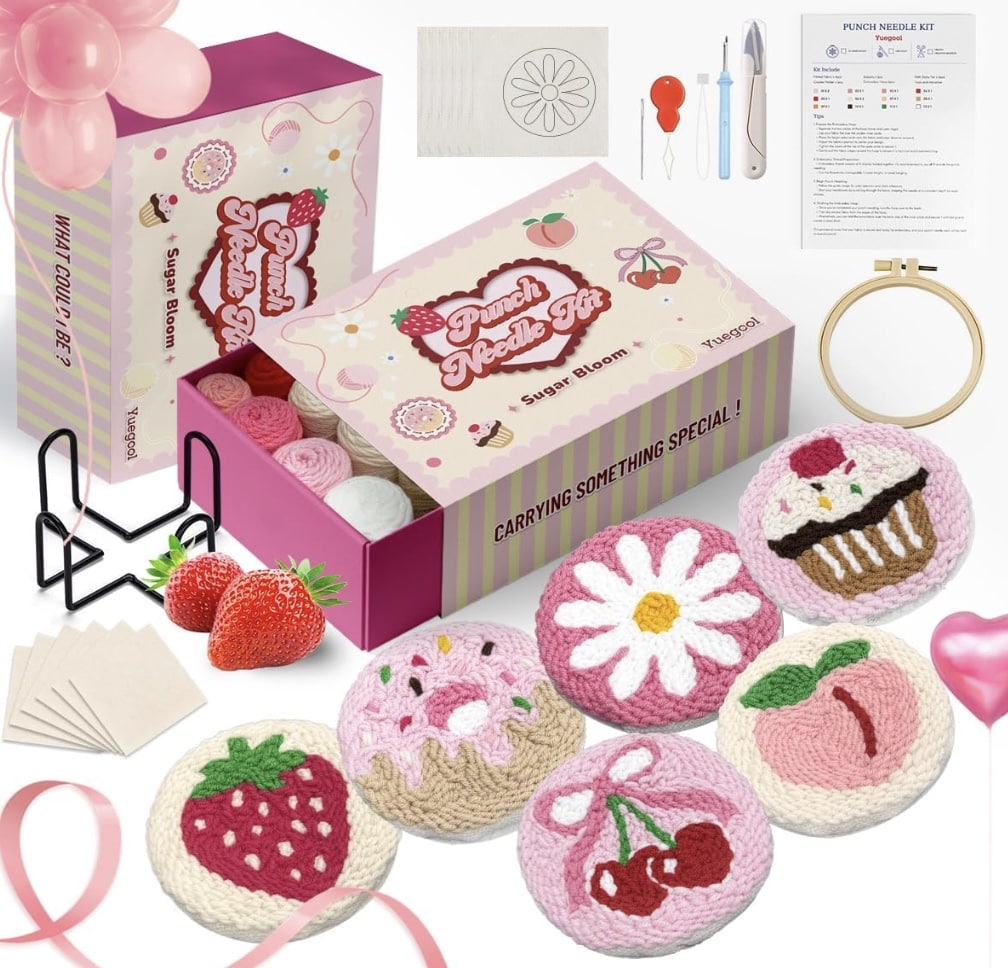
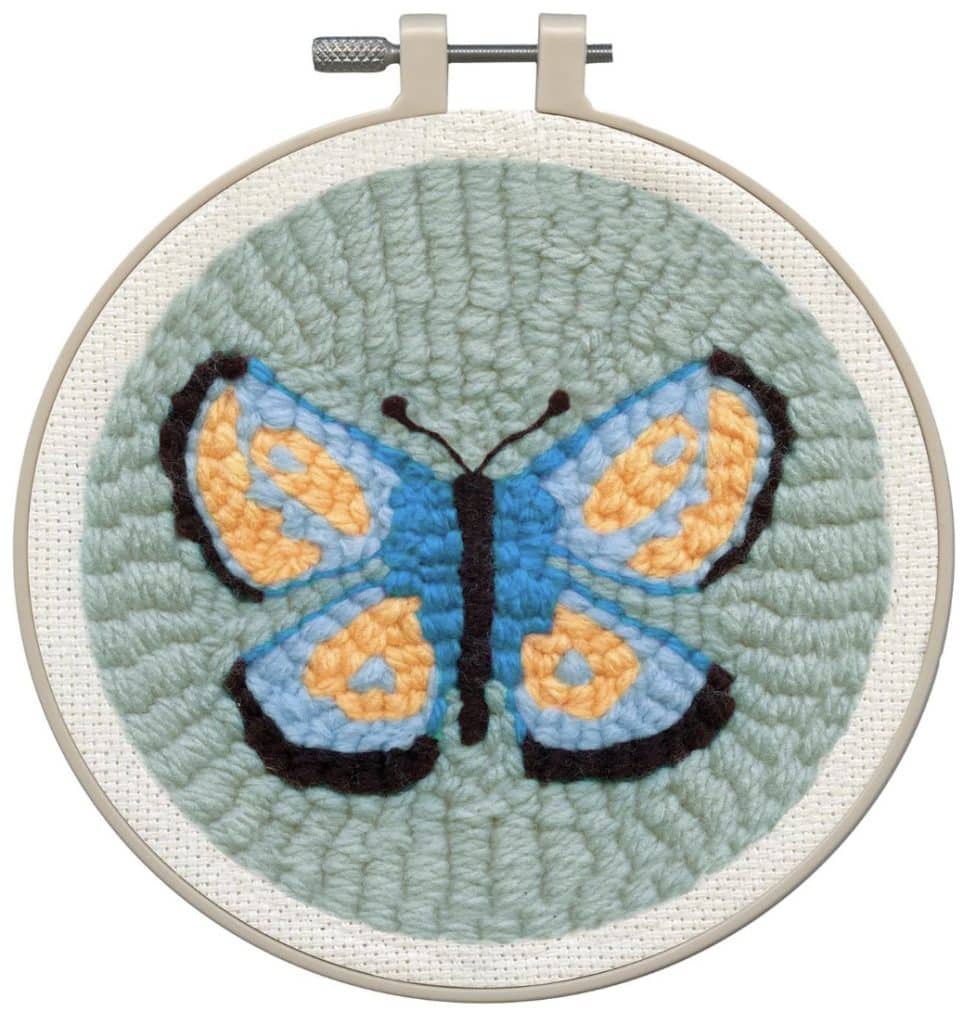
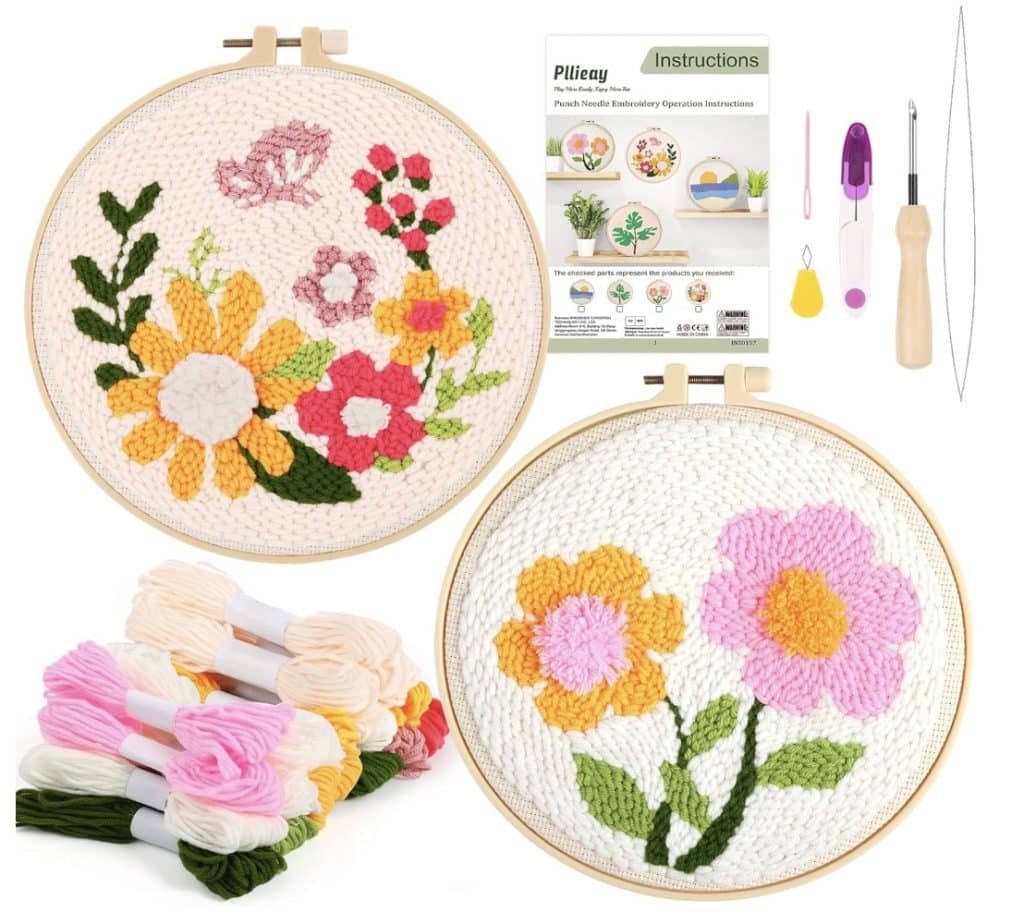
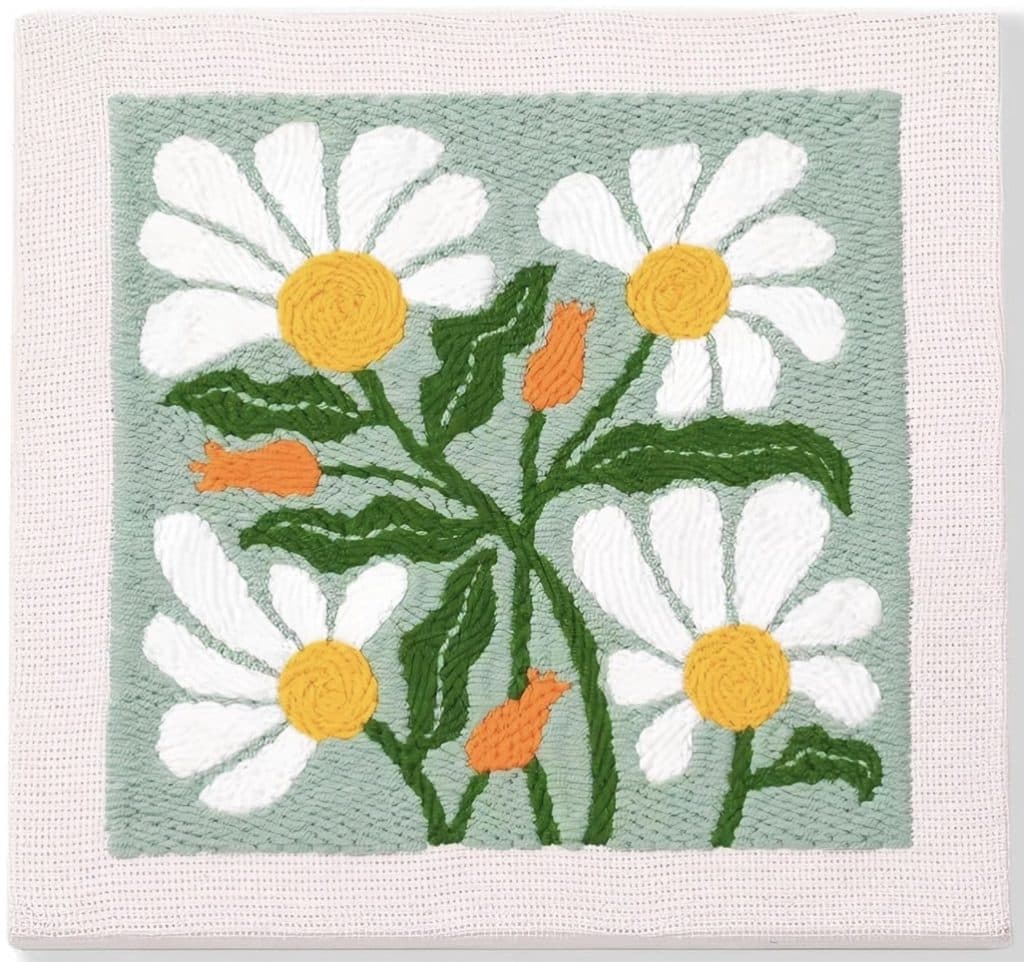
Tap on the image to shop the product!
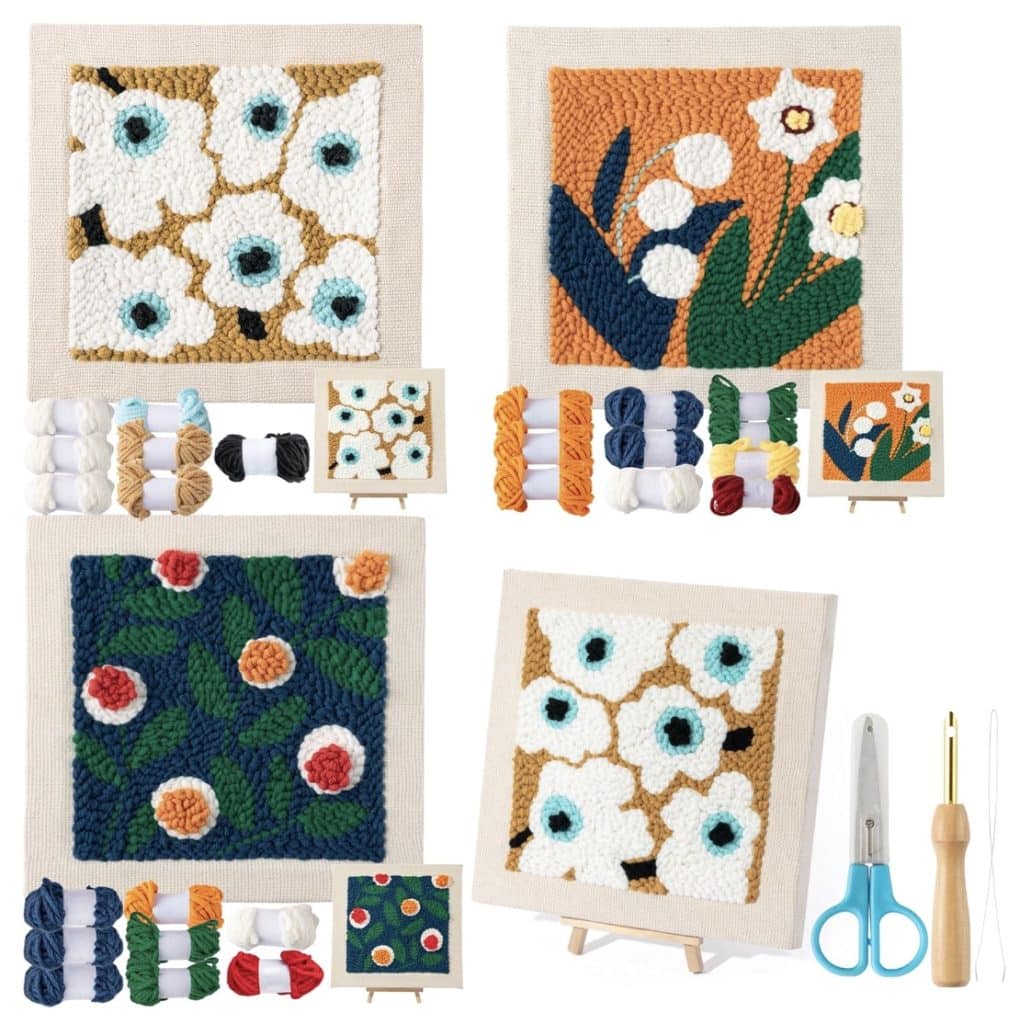
Blogger’s Best DIY Flower Crafts
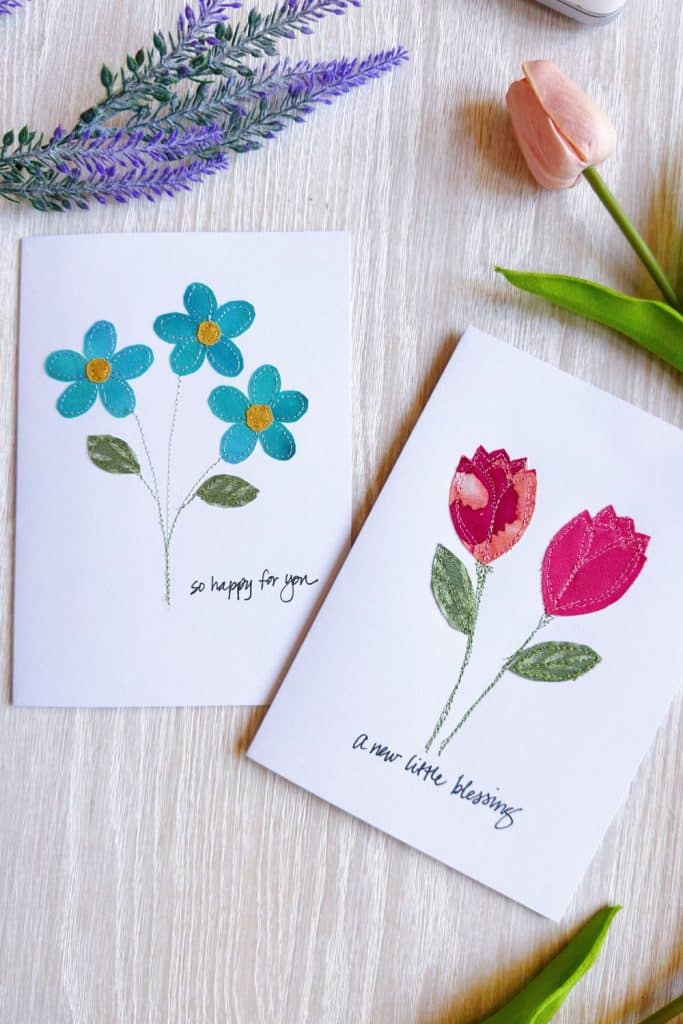
Floral Embroidered Handmade Cards | My 100 Year Old Home
Floral Embroidered Handmade Cards are one of those projects that combine creativity, storytelling, and meaningful making in the most beautiful way. Using fabric scraps, simple stitching techniques, and a little imagination, I created a collection of stitched cards that feel personal, artistic, and truly special to give.
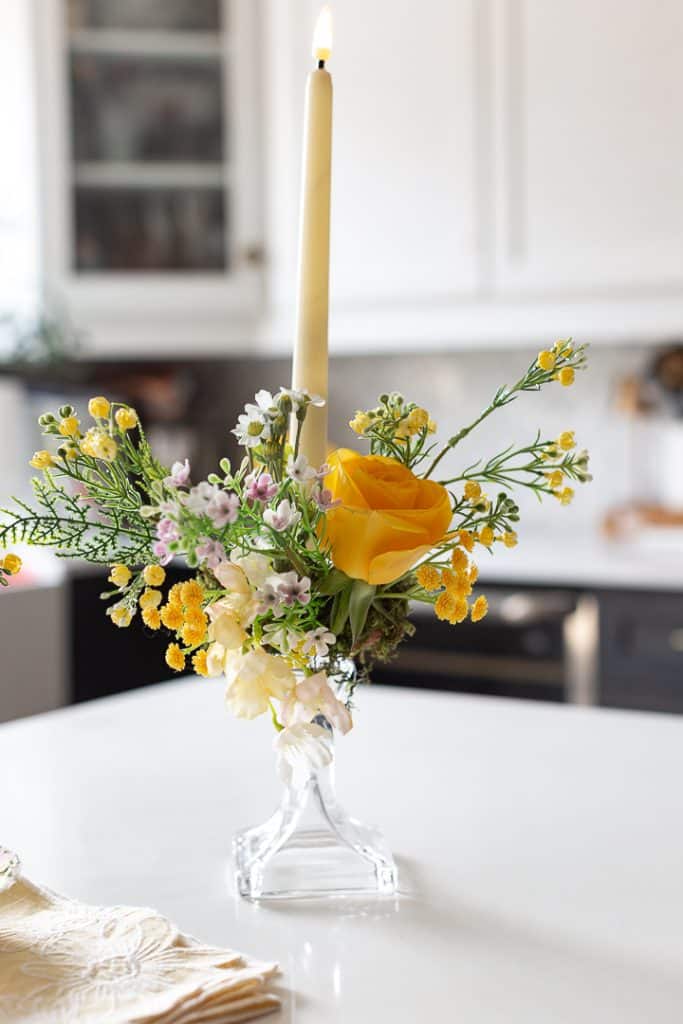
Candlestick Holder Floral Arrangement | Craftberry Bush
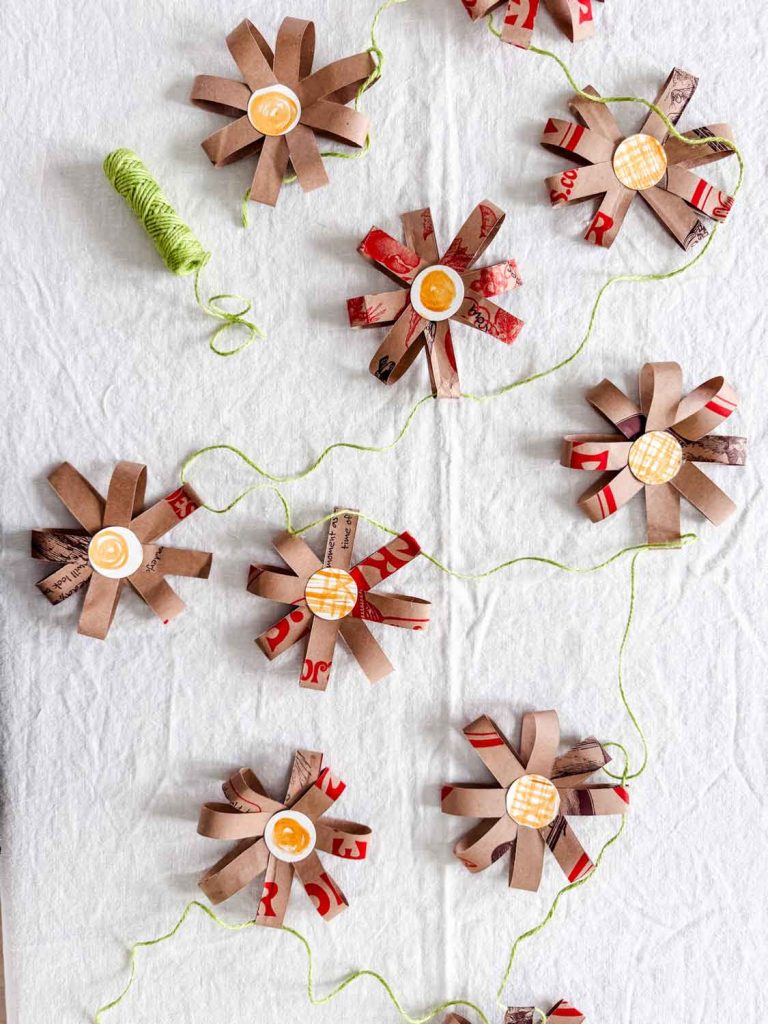
Paper Bag Flower Garland (Using a Trader Joe’s Bag) | Most Lovely Things
A simple paper flower garland made from a Trader Joe’s paper bag and hand-painted watercolor circles — an easy, charming craft that turns everyday materials into something unexpectedly sweet.
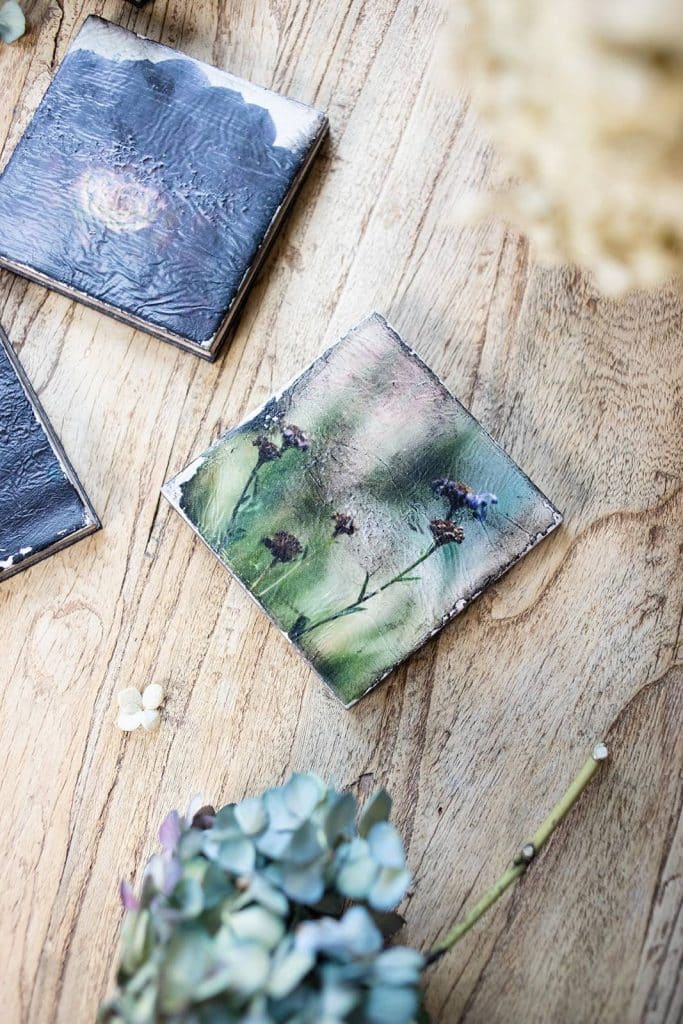
Floral Decoupage Tile Coasters | My Sweet Savannah

- Lemon Aioli Sauce Recipe - June 5, 2026
- Ginger Beer Mocktail Recipe - May 28, 2026
- Outdoor Tables and Chairs - May 27, 2026

Annie Diamond
Janine, these are so beautiful. I’ve never tried punch needle, but I’m tempted now! Pinned!
Annie
MELAINE
I SERIOUSLY WANT TO TRY THIS, IT’S TOO CUTE!